Tuesday, March 4, 2014

I've had this shitty feeling about plastic all along.

Haven't you?

There is a great piece of reporting over at Mother Jones that has me feeling sick to my stomach about the cups we've been giving our little ones...convenient, and...plastic. (Go ahead hippy friends, castigate me. Throw stones. Snark if you want. I am defenseless.)

Not just the BPA-free cups. All the household storage containers, plastic wrap...even the "kind" brands of plastics...all of em...no good. 

Blake shows that the chemical compounds that have been used to replace BPA...drum roll please...have MORE estrogen compounds than BPA.

And the manufacturers even used the same lobbyists and strategists as Big Tobacco to hide the information....

Doesn't that just suck?

Are we surprised?

Here's Amy Goodman interviewing Blake about the story on Democracy Now! :


It's a great piece of investigative journalism. It will be interesting to see what kind of play, if any, this story gets...

I think there's a great reticence to the idea that despite your best efforts, you've been poisoning yourself and your kids. People by and large just don't want to hear it.

I know I didn't.

But as much a pain in the ass as it sounds...I think it may be time to ditch all the household plastic and find alternative means of storage.

Guess we'll have to start doing some shopping....

Thursday, February 6, 2014

Do no harm?

This cautionary tale on ethics was clipped from the Future Journalism Project . I'm curious to hear what you think about it...

Thanks, Kristen!

futurejournalismproject
“The story, even if it is a good story, is not the most important thing.”
Maria Headley in Sinatra’s Cold is Contagious.
Headley writes in reaction to Caleb Hannan’s Grantland story, Dr. V’s Magical Putter, which has become something of a case study in journalism ethics since it was published on January 15.
On the Media recaps here:
Last week, ESPN’s  Grantland ran a remarkable story titled “Dr. V’s Magical Putter,” a journalistic odyssey that began with curiosity about a supposedly revolutionary golf club, and ended by focusing on the chaotic life of its inventor, a woman named Essay Anne Vanderbilt. The reporter, Caleb Hannan, discovered that Vanderbilt was transgender, and he revealed his knowledge of this fact to Vanderbilt. Shortly after, Vanderbilt committed suicide.
The piece subsequently made its rounds on the web, sparking outrage and raising a discussion on transgender rights in media, and the ethics of outing.
Vice takes us through Hannan’s reporting process and what he ultimately decided to publish:
He tells us “everything he knows,” which is definitely not the same thing as “everything that’s relevant.” He refers to Dr V as “he” and publishes her old name. He discusses her life before she transitioned to female. He tells us she was married. And that she’d tried to kill herself once before, a few years previously. Never mind that she was clearly vulnerable, it was all just another fantastic twist in the plot for Caleb. “What began as a story about a brilliant woman with a new invention had turned into the tale of a troubled man who had invented a new life for himself.” And never mind that faking her scientific credentials had nothing to do with being transgender. Caleb, who has been found guilty of sloppy journalism before, was simply recycling a media narrative that casts trans people as liars and fakes. 
Grantland’s Editor-in-Chief Bill Simmons has since publicly apologized for the story, taking the blame for his writer’s mistakes and lamenting that he failed Hannan as an editor. Simmons admitted that the Grantland staff was not sensitive enough with the story and uninformed on transgender people’s rights, high suicide rates among trans* people, and even correct pronoun usage.
FJP: As Headley points out, there are a few things that should come before the all-important story for a journalist. Right after “Seek the truth and report it” on SPJ’s Code of Ethics comes “Minimize harm — Ethical journalists treat sources, subjects and colleagues as human beings deserving of respect.” 

Monday, February 3, 2014

Social-ism

As much as I love living surrounded by the woods and wouldn't mind at all going back to having to enter my house to talk on the phone and having to walk to the mailbox to get my "mail," the future of communications is upon us. We are all instantly synced in all the time. We shout, and everyone hears. Some even "like" it on Facebook.

Journalists function within this vast, fast and fluid environment As communicators, we have to.

The tools are always changing, though, and the system is still evolving. It's not necessarily a straightforward thing to learn. As with many other things journalistically, it's about the right curiosity, self-drive and willingness to try and try again.

This UC Berkely tutorial presents an incredibly comprehensive view of the digital media landscape. I think going through it over time could prove very useful. Since we'll be talking about social media on Thursday with our guest Nicole Oullette, of Breaking Even Communications, I thought these sections on Twitter  and Facebook  would be worth a read.

I also like this blog post on why journalists must use social media.

In 2009, Harvard's Niemen Foundation put out a lengthy and deep study of journalism's place in social media. Some of it may be a little outdated, but it gives you a sense of just how deep you could go on the subject. Niemen is actually an incredible source for journalists.  Their Niemen Journalism Lab is a great place for reporting on on all things related to journalism and the new media.

There are many other sites exploring social media and the relationship of journalism with social media. Here are a few:


This has some very hands-on advice for those of us who aren't always so quick about this stuff (like me!): 


Monday, January 27, 2014

Ethical challenges as common as the common cold

Ethical dilemmas grab onto the pantleg of a humble journalist just like a child wanting to be held. Yes, they are always there. No, they do not care what you are doing. Yes, they want you to pay attention to them. No, they will not go away if you ignore them.

That's only gonna make them louder.

Understanding ethics in theory is one thing, but in the field, at the desk, it's quite another. Just to "seek truth and report it," which is where the Society of Professional Journalists recommends you begin,  raises all kinds of issues. Like, who's truth? And, report it...how?

And, if you don't know what I mean about "who's truth," just start asking questions. What is the "truth" of red to someone who is color blind?

Mix this with the second major principle on the SPJ's list, which is to  "minimize harm", and you really have to start thinking. What if it's true, but it's going to be harmful to someone? What if that person's harm is balanced by a service being brought to many, aka: "the greater good?"


                                                                                                                jmichaelrios


Guardian journalist David Banks told a great story back in October about the ethical dilemmas he faced some 20 years ago when asked to find and approach the family of a killed soldier before they even knew the soldier was dead. 

"The dilemmas came thick and fast - accept the job or not, given the family had not been officially informed? Once I had found them, should I contact the Foreign Office first, or knock on the door? And if you do go ahead and knock, what on earth do you say to a family in those circumstances?"

Banks told the story to his readers in a great way, too. He posted the story assignment and subsequent sequence of events in real time on his blog and Twitter, and challenged readers to follow along and talk about what they would have done in his shoes. It makes for a great read.

Of course, there are many more real-life stories of ethical dilemmas out there. Indiana University has a fascinating collection of ethics case studies here.

The SPJ's code of ethics, as mentioned above, has been the industry standard for many years. But as the new, digital landscape created the need for a new, or expanded, code of ethics? Stephen J.A. Ward thinks so. Here he is, writing at the University of Wisconsin's Center for Journalism Ethics.

Faculty at Santa Clara University also feel that some new ethics codes are necessary for the modern media world.

The codes of ethics of many big media organizations and associations are collected by the Pew Research Journalism Project here.

Finally, for anyone interested in following ethics in and within the news industry, iMedia has some entertaining coverage.


Sunday, January 26, 2014

Getting the whole picture

For anyone wondering why we are taking up the study of photography in what is primarily a writing class, this article on iClarified should provide a pretty good answer to your question. As stated, in the spring of last year,management at one of the country's major newspapers, the Chicago Sun Times, laid off all of their photographers and started training their reporters to take pictures with iPhones.

The move was, of course, met with derision from the remaining staff, and who can blame them. Should writers really be responsible for collecting images? Do they have the skills and the know-how to do so?

                                                                                                               Michael Boccieri
                                                                                                           

Apparently, they better. As the Pew Research Center reported last November, nearly half of all visual journalist jobs at U.S. newspapers have been eliminated since 2000. And reporters are increasingly being asked to take up the slack.

This fits right in with the idea of "convergence" in the textbook for class. Of course, that convergence is happening not just in the media, but in the journalists themselves. A skilled reporter entering the workforce now increasingly needs to be able to take a decent picture, design a page, and put together a compelling video. Sounds like a lot more than writing, doesn't it?

Many of the same skills that we are leaning in this class will come to bear on your photographs, however. We need many of the same qualities: transparency, truthfulness, immediacy, relevance and context. And even more so than writing, photography presents the journalist with a great chance to capture and share the emotion of a situation.

This Slide Share by Nithin Kalorth presents a simple, informative introduction to photojournalism. It is certainly worth taking a look at.

In class on Thursday, we'll hear about what makes a great photo and how to capture the perfect image. Before then, it would be helpful to become familiar with some of the work being produced today. Take a look at some of these photo galleries, just to get a sense of what's possible.

http://greatphotojournalism.com/

http://www.americanphotomag.com/photo-gallery/2012/12/2012-photojournalism-year

http://www.noupe.com/photography/35-powerful-photos-that-each-tells-a-story.html

http://www.mediabistro.com/10000words/20-photojournalists-fantastic_b354

For anyone looking to take things a little further, this e-book by Adam Westbrook breaks down the finer points of multi-media journalism and offers some great pointers.

Monday, January 20, 2014

Data journalism

The emerging field of data journalism is full of fascinating possibilities. For those who are new to the idea, Simon Rogers, a former news editor at The Guardian and now data editor at Twitter, is a great place to start. Rogers is a boots-on-the-ground storyteller who has found his way to the forefront of what is quickly becoming the standard bearer for investigative journalism. He's got a great facility for describing what he does in this Tedx Talk from 2012.


I have to say I love data journalism for the infographics you can produce. Sites like
visual.ly allow the user to plug in data sets to create great looking posters, like this one about the apparently wonderful pineapple. To throw all this information about a fruit into a 20-inch article would likely net a pretty dull result, but doing it this way speaks of so many possibilities.


Data journalism largely involves mining huge sets of information to produce meaningful statistics, uncover trends and discover hidden stories. For a while data journalism was the province of coders, but that is changing, and changing fast. The emergence of apps and other online tools that scrape data, mine data or turn data into great looking inforgraphics is, as Rogers refers too, democratizing the field.

Here's a list of some links that might be useful for anyone wanting to take the study of data mining a little further:

Vocativ is an exciting news organization using data mining and other innovative technologies in their work.  The magazine Fast Company did a fascinating piece on what the group does.

The International Consortium of Investigative Journalists  is another hard-hitting group of reporters who are making use of data mining technology. They've got some great tips and tutorials on computer assisted reporting here.

The National Institute for Computer Assisted Reporting offers courses, data and services such as cleaning, mapping and analyzing data.

Some tools and writings about tools:

http://blog.ouseful.info/2008/10/14/data-scraping-wikipedia-with-google-spreadsheets/

http://gijn.org/resources/data-journalism/

http://sabcmedialib.blogspot.com/2011/07/google-data-mining-tools-for.html

http://www.scoop.it/t/data-mining-for-journalists

http://www.poynter.org/how-tos/newsgathering-storytelling/211954/10-digital-tools-journalists-can-use-to-
improve-their-reporting-storytelling/

http://truth-out.org/news/item/15306-five-great-online-tools-for-mining-public-records

https://scraperwiki.com/

http://www.journaliststoolbox.org/

https://investigativedashboard.org/

Finally, the Data Journalism Handbook  offers a wealth of information, including this great list  of data journalism examples.


Thursday, January 9, 2014

crown of thorns


In class we are reviewing the inverted pyramid style of writing, and as i was thinking earlier this evening about teaching it i found a great explanation by Jennnifer Dukes Lee.

"In essence," Lee says, "we are giving away the ending in the opening paragraph, reversing what storytellers have done for centuries when they stack facts chronologically. It goes against our instincts as writers."

 Lee lays the style out so directly and succinctly. I only aim to speak so clearly.
Lee titles herself  "A storyteller. Grace dweller."  That is a graceful description.

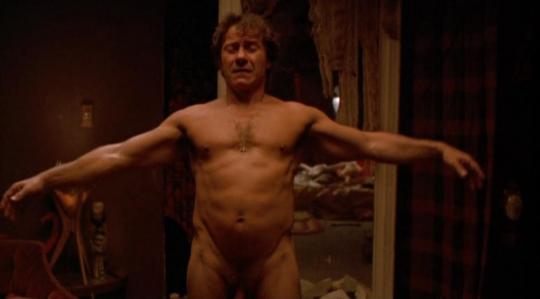
Most of Lee's other posts are quite Christian oriented. I scrolled across this post from Romans 8:1 just as, on Netflix, Harvey Keitel goes through an extreme and shocking state of intoxicated gnosis in Bad Lieutenant.  Sync!

Why We Are Memorizing Scripture as a Family in 2014


It makes sense, though.  The movie is about grace and redemption.

Can the Bad Lieutenant find redemption? The very question troubles him to his core.


Monday, January 6, 2014

They live!

UFOs are everywhere today!

At least in my news feed they are...

First comes a report from an investigation at  London's Heathrow Airport, where a pilot says he swerved out of the way of a metallic, cigar-shaped UFO last summer.The United Kingdom Airprox Board, part of the country's Civil Aviation Authority, investigated the incident and found as follows, according to London's Daily Mail:

"'Although only supposition, members opined that this may have been due to a combination of a possible reflection of the low sun off one of the aircraft to the west, and of the pilot's head movement as he looked forward.
'It was decided that, although the reflection theory had some merit, the overall dearth of information relating to the event rendered and meaningful finding impossible.'"

In other words, no explanation at all. Hmmm.....

                                                                                                        www.allnewsweb.com

Even more intriguing was this piece  by Travis Gettys at The Raw Story about a former Canadian defense minister who says space aliens live among us but won't give us most of their technical know-how until we disarm our nuclear weapons. 
Defense minister Paul Hellyer, originally speaking to Russia Today (maybe not the most reliable journalistic organization, but you can't take the guy's credentials away, and there he is in the video yammering away) was quoted saying:

“We have a long history of UFOs and of course there has been a lot more activity in the last few decades, since we invented the atomic bomb, and they are very concerned about that and the fact that we might use it again, and because the cosmos is a unity and it affects not just us but other people in the cosmos,” Hellyer said. “They are very much afraid that we might be stupid enough to start using atomic weapons again, and this would be very bad for us and for them, as well.”

Turns out, the Russia Today interview is quite in-depth, and includes warnings of galactic war and all sorts of sci-fi scenario stuff, aliens living on the planet for thousands of years, and etc. The entertaining interview contains many gems from Hellyer, including this one: 

"I don’t know if you personally have ever read the Bible or not but I think the star of Bethlehem was one of God’s flying saucers."

Jesus may have been the work...of ancient aliens?


That's pretty rich, really. But, who is this guy? Should we trust him just because he held a high-level Canadian government position 40 or 50 years ago?

I started Googling Hellyer. Turns out, he's been saying off-the-wall stuff like this for the past 7 or 8 years. But a thread from 2005 that kind of seems to discredit him early on. It refers to a Wikipedia article about Hellyer that states:

"In early September 2005, Hellyer made headlines by publicly announcing that he believed in the existence of UFOs. On 25 September 2005, he was an invited speaker at an exopolitics conference in Toronto, where he told the audience that he had seen a UFO one night with his late wife and some friends. He said that, although he had discounted the experience at the time, he had kept an open mind to it. He said that he started taking the issue much more seriously after watching ABC's Peter JenningsUFO special in February 2005.[citation needed]
Watching Jennings' UFO special prompted Hellyer to read U.S. Army Colonel Philip J. Corso's book The Day After Roswell, about the Roswell UFO Incident, which had been sitting on his shelf for some time. Hellyer told the Toronto audience that he later spoke to a retired U.S. Air Force general, who confirmed the accuracy of the information in the book. In November 2005, he accused U.S. President George W. Bush of plotting an "Intergalactic War"."

Now, Wikipedia is clearly not the most reliable source. But if this is accurate, we are to believe that Hellyer saw something on TV, read a book that is controversial at best , and talked to someone in the US Air Force for his information. None of it seems to have had to do with any time he spent in government. Not very reassuring, it seems.
But what are we to make of the whole thing? A strange form of insanity that lets the victim comport himself in a completely sane and normal manner while saying things that most people think of as crazy? Or is there something more....
All the Googling I could do turned up little more about Hellyer, other than his stranger and stranger statements. Will we finally have to just accept what Yahoo Answers told  "Jesus Was My Pal" seven months ago when he asked if aliens were real?
"probably. It is too arrogant to simply discount the presence or absence of other beings in the universe."
Seems like a guarded statement to me, Yahoo Answers. But I guess it's all we have for now...

Friday, January 3, 2014

Tick-tock

Reporting recently in Newsday, Delthia Ricks highlighted the ongoing problem we are having with Lyme disease here in the Northeast. Three sudden deaths from swelling of the heart? One begins to wonder.

Every time I read about or report on Lyme I am reminded of this Yankee Magazine  article by Edie Clark. In this fascinating piece, Clark reviews information tying together World War II, Nazi scientists, germ warfare and bird migration routes to present a surprisingly plausible theory about the introduction of Lyme disease into the United States.
Of course, as human beings, we are always looking for patterns. So, perhaps it's just a simple matter of Man vs. Nature,, 21st century style. Once upon a time, we just got sick and died. We lacked X-rays, MRI imaging, heart stents, and high-resolution everything. Now, we can see the Lyme spirochetes under the microscope, we know how they spiral their way into our vital systems.
We see so much. But what do we really know?